The U.S. has been through 12 major recessions since World War II, which works out to roughly one every six or seven years.
The last huge one was 2008–2009, so it’s not crazy to wonder if we’re due for another, or maybe already in one depending on who you ask.
In this post, we’ll break down 5 businesses that thrive in a recession. These are mostly service-based businesses that people still need even when money gets tight, layoffs hit, and consumer spending slows down.
Some of them might surprise you, but the logic is simple: certain problems don’t disappear just because the economy is struggling.
Understanding Recession
To explain this to 5 years old, a recession is decline in economic activities for several months or years. Generally, an economy is in a recession when there is two consecutive negative GPD growth and the unemployment rate spikes up drastically.
Impact of Economic Downturns on Businesses
When things get shaky, you have to wonder what makes a business truly recession-proof? Not every business suffers equally when the economy takes a nosedive. People lose jobs. Shops close. Life gets flipped upside down, and folks tend to make difficult decisions.
Still, some needs just don’t disappear. People keep needing certain services, no matter how ugly the numbers get. You can’t really postpone some things. The trick is figuring out which services make the cut. If you pick the right business, you might just ride out the storm while others are scrambling.
What Keeps a Business Running During Economic Downturns
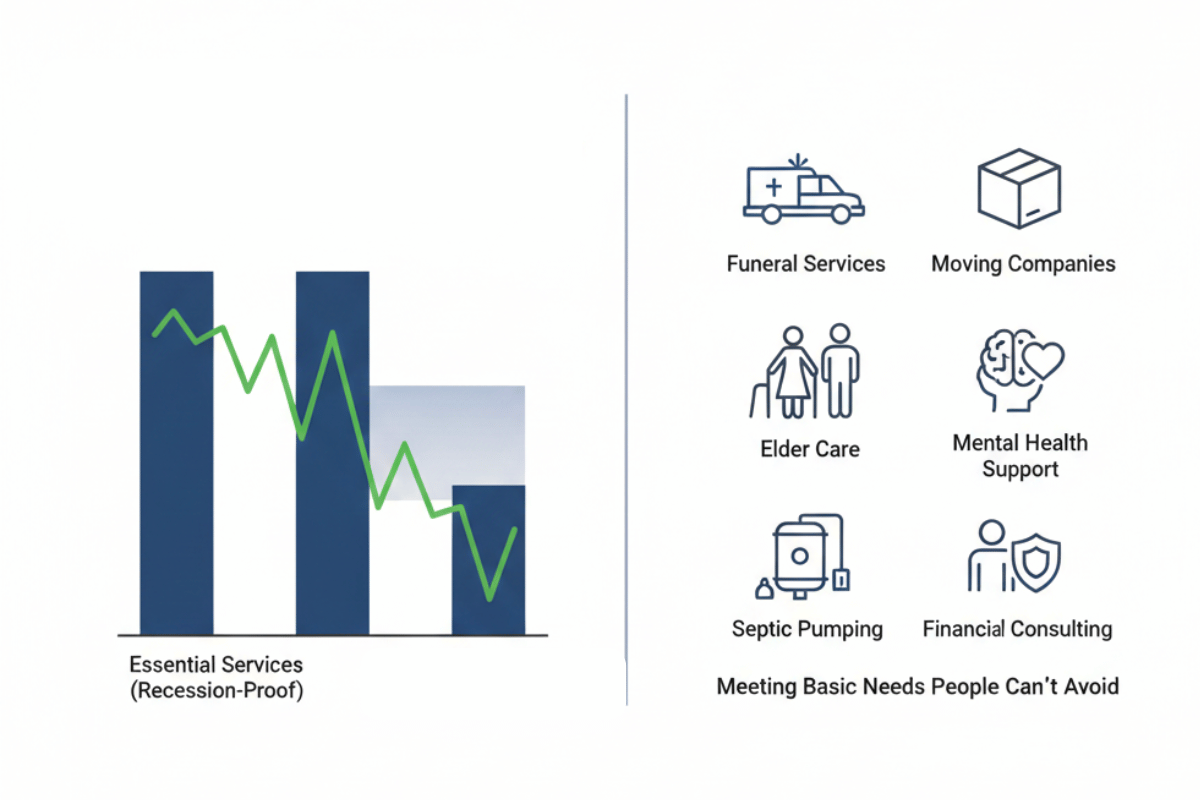
Meeting Basic Needs People Can’t Avoid
Some services just can’t be skipped, even when the economy is on fire. People still need them end of story. So, what’s the secret sauce for resilience? Offer something people literally can’t go without.
Examples of services people always need:
- Funeral and cremation services
- Moving companies
- Help for aging people
- Mental health and addiction support
- Septic pumping
These aren’t luxuries. They’re must-haves. When someone dies, families need funeral services. When older folks need care, their families look for help. When a job loss or divorce forces a move, people call movers.
Take cremation businesses. The average cremation costs about $1,638. Three a day? That’s $4,900 daily, or $34,000 a week, and over $145,000 a month.
People die at a steady rate, recession or not. Some stats even hint the rate ticks up when times get tough. It’s not cheerful, but it’s reality.
Keeping Money Coming in When Times Get Hard
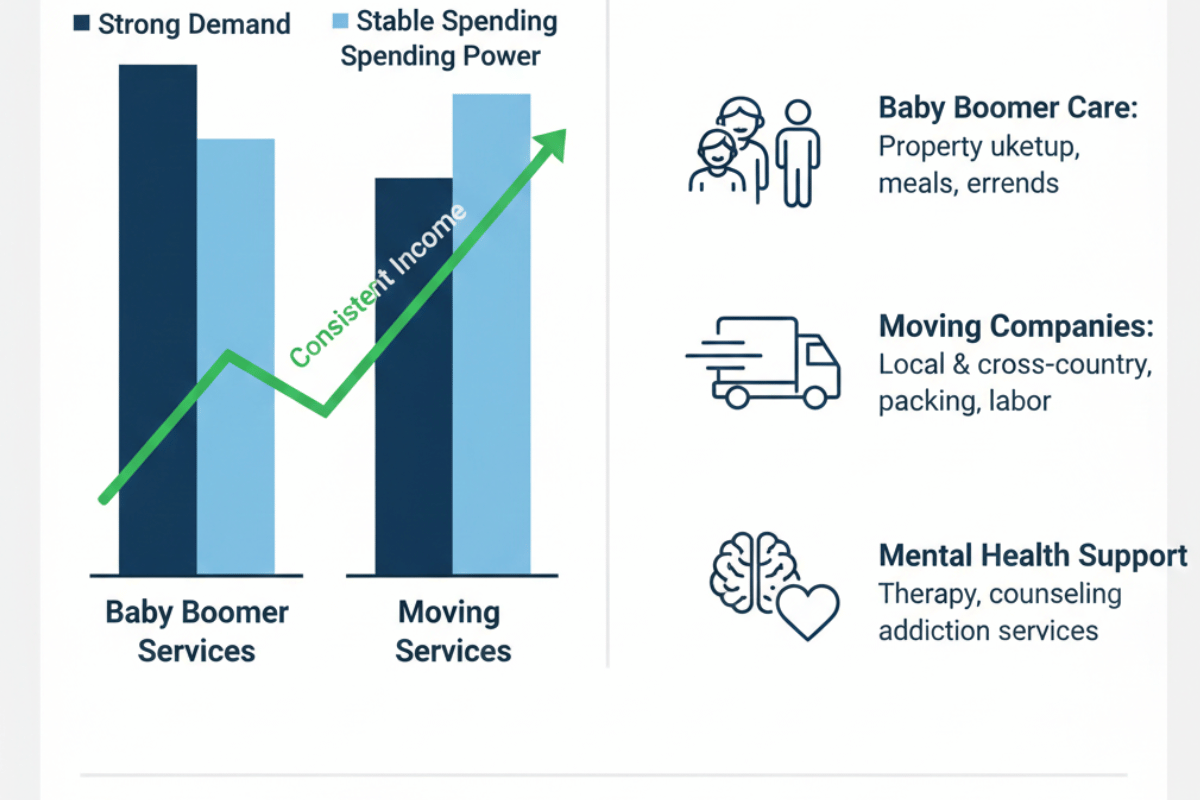
It’s not enough to have demand. You need customers who can actually pay, even if money is tight.
Baby Boomers make up about 21% of the population right now, and they’re getting older. They need help with property upkeep, meals, personal care, errands, cleaning, and staying active. This generation has done well for itself. Many watched their homes quadruple in value. Their investments are solid. They are more likely able to pay for help.
Moving companies see steady work too. When jobs vanish and businesses close, people have to move sometimes across the country, sometimes just across town. Not everyone can (or wants to) haul boxes themselves.
You can charge around $1,000 per day for moving gigs. Even quick jobs just a few hours can net $500. Five days a week? That’s $5,000 a week, or $260,000 a year with just one truck.
- Focus on neighbourhoods with lots of folks over 55
- Skip fancy equipment at first
- Grab the small jobs big companies ignore
- Look presentable and be friendly it matters
- Find someone who can help with both moving and sales
Mental health and addiction services don’t slow down, either. When things get rough, people struggle more with anxiety, depression, anger, and substance use. They need real help, recession or not
If you want a business that keeps money coming in when everything else is falling apart, pick something people genuinely need and can still pay for.
1. Start a Takeaway Business from Home
Are you the type of person that enjoys cooking and you fancy turning your culinary skills into a business, if yes, I have some good news for you, you can start a home-based takeaway food delivery service. With the growth of delivery platforms like Just Eat, Deliveroo, DoorDash (US) and Uber Eats, many people now bring the restaurant to their home by buying restaurant quality food from home kitchens. With relatively low upfront costs and flexible operation, a home takeaway business can be a profitable business venture
Why Choose a Home Food Delivery Business?
Operating a takeaway from home allows you to bypass the high costs of renting commercial premises and associated high rates and business expenses, making it a great fit for first-time entrepreneurs. UK consumer tastes are increasingly diverse, with demand for everything from vegan dishes to authentic international cuisines. A home business gives you the opportunity to experiment with your menu and adjust your food and drink offerings swiftly as per customer feedback and trends.
Understanding the Market and Legal Requirements
The food scene has evolved over recent years, and eating habits continue to change. Customers now expect a broader range of cuisines, healthier options, and innovative food formats. Whether it’s hearty comfort food, artisan snacks, or plant-based meals, there’s room to carve out a niche if you understand local community and your target audience.
Before you start selling, it’s essential to understand the legal side of running a food business, you must register your food business with your local authority at least 28 days before you begin serving customer, this also applies to a takeaway that is ran from home. This requirement applies to anyone who prepares, stores, cooks, or distributes food for the public. See Food Standards Agency
You’ll also need to make sure your kitchen complies with food hygiene and safety standards; it is also recommended that you take food safety training. Good record-keeping and proper storage facilities help maintain high standard and customer’s confidence
Choosing How to Deliver
Collaborating with Delivery platforms is probably the easiest way to reach customers, you can also advertise on local boards and high street stands to create awareness. Platforms such as Just Eat, Deliveroo, and Uber Eats connects home chefs with customers easily. Each platform has its own fee structure and sets of requirements; you would need to research which one works well for your business.
Tips for Long-Term Success
First, start with a business plan and be realistic about your financial targets. At the beginning, start with simple menu and ensure to test your menu with friends and family or in local online communities, this will allow you to refine your food and drinks offerings before you scale up. Focus mainly on quality, consistency, good customer service, and feedback, these are the factors that help small food businesses thrive.
Careful planning, attention to hygiene and legal compliance, and a menu people like, a takeaway business from home can grow from a passion side hustle into a profitable venture that may supply big super store like Tesco and ASDA on day.
2. Moving Companies (Why Moving Stays Busy in a Recession)
How Economic Downturns Affect Moving Demand
When the economy sours, life changes fast. People lose jobs, businesses close, divorce spikes, suddenly, a lot of folks need to move willingly or not. Moving companies actually thrive in these moments. Nobody wants to move, but sometimes you just don’t have a choice. And not everyone can drag boxes up a flight of stairs.
Getting Your Moving Business Off the Ground
Starting out isn’t complicated. All you need is a truck, a website, and a handful of solid Google reviews. You can start by doing a job for friends and family and get them to give you reviews on Google. That’s enough to get you rolling. A medium sized UK moving company charges £1000 per day for a standard 3-bedroom house. See estimate in table below for a 3.5 working day per week and 50 working weeks per year.
| Period | Revenue |
| Per day | £1,000 |
| Per week | £3,500 |
| Per month | £12,000 |
| Per year | £175,000 |
Giving that you are a small untested business, you can charge £750 per day for a typical 3-bedroom house move. Assuming a 3.5 working days a week charging £750 a day, this works out roughly £131,250 a year
- Target older communities
- Don’t go crazy buying equipment
- Take the jobs big movers ignore
- Be approachable and trustworthy
- Get help with both labour and sales
Big moving companies don’t want the small jobs. That’s your opportunity. Oddly enough, the profit on a short job often beats a full day move. With just one truck, you can hit $260,000 a year if you hustle. Older folks are your best customers they need help, and they’re willing to pay for it.
3. Services for an Aging Community
Rising Need from Older Americans
Roughly 21% of Americans between 61 to 79 years old, they are the baby boomer generation. They’re aging, and with age comes a need for more help no matter what’s happening with the economy. This isn’t about luxury. It’s about getting by. Older adults need these services regardless of the headlines.
Most Boomers have done well financially. Home values soared; investments grew. They can afford to pay for help. If they have to liquidate all assets apart from home equity, around 75% of baby boomers could afford private adult care.
What You Can Offer Older Adults
There’s a buffet of services you can offer. Here’s what’s in demand:
- Yard and property maintenance
- Meal prep
- Personal care – think haircuts, foot care
- Errand running
- House cleaning
- Organizing activities
Activity coordinators keep older adults engaged. It’s more important than you might think. Demand for these services holds steady, even as the economy stumbles. The aging population isn’t shrinking anytime soon, either.
4. Self-Storage Operations
Budget-Friendly Options for Launching Your Storage Facility
You can get into the storage business without going broke. No need for fancy buildings or high-tech gear to get started. Storage lots are probably the cheapest entry point. You’re basically renting out parking spaces for RVs, boats, trailers stuff people can’t keep at home anymore.
What makes storage lots so tempting?
- Low startup costs
- Minimal maintenance
- No climate control or expensive buildings
- Just some fencing and basic security
Start with a small piece of land and add more as you grow. You don’t have to deal with construction headaches or building permits right away. Your main costs are the land, some gravel or pavement, fencing, and lights. That’s about it and you start collecting rent from folks who just need space.
Money-Making Opportunities in Storage Spaces
Storage lots can pull in good money with low overhead. The profit margins are better than most people expect. People always need storage. Actually, when the economy goes south, storage gets even more important. People downsize, move in with family, or relocate for work.
Your revenue depends on a few things:
- Property size
- How many vehicles you can fit
- Monthly rates in your area
- Occupancy rate
Ongoing costs are low once you’re up and running. No heating or cooling bills. You don’t need a big staff. Most of the job is collecting payments and keeping the place safe.
Most customers sign month-to-month leases, so you’ve got steady income. They pay you whether they come to get their stuff or not.
The need for storage keeps rising. Boomers are downsizing, younger folks move more, and everyone’s got too much stuff for their space.
5. Mental Health Services
When Times Get Tough, These Services Stay Busy
When the economy tanks, people struggle. Jobs disappear. Bills pile up. Stress levels shoot through the roof. Mental health and addiction problems? They get worse for a lot of folks. It’s tough, but that’s our reality right now just look at all the layoffs and cost of living spikes across the US and Europe.
You could build a business that helps people get through these hard times. The need for these services doesn’t fade just because money is tight. If anything, more people need help when things go south.
Areas where you could start a service business:
Mental Health Services
- Anxiety help
- Mood problems
- Psychotic disorders
- Eating disorders
- Anger management
Addiction Services
- Alcohol treatment
- Drug treatment
- Sexual disorders
Service Areas That Stay Strong
The thing about mental health and addiction services? People need help, recession or not. When a downturn hits, these problems often get worse. More job losses. More families stressed about money. More people turning to substances to cope.
So your services matter even more. You’re not just running a business you’re stepping up when people need it most. The amount you can charge depends on what you focus on. Each category has its own price points. But here’s the big thing: the demand doesn’t really drop when the economy does. If anything, it grows.
Key Takeaways: Why These Businesses Thrive in A Recession
- Recession-proof businesses provide services people can’t do without, no matter how bad things get.
- Service businesses like cremation, moving, and elder care stay steady because demand doesn’t really drop off during hard times.
- Most of these don’t require a fortune to start, and you can grow them into something substantial if you play your cards right.
Conclusion: Choosing Businesses That Thrive in a Recession
A recession can shake a lot of industries, but it doesn’t hit every business the same way. The businesses that tend to thrive in a recession usually aren’t flashy or trend-based. They’re built around real needs people can’t postpone, even when budgets get tight.
That’s why service-based businesses like takeaway food, moving, elder care, storage, and mental health support often stay steady during economic downturns. In many cases, demand doesn’t drop at all. Sometimes, it actually increases because life keeps happening, just under more pressure.
If you’re thinking about starting a business during uncertain times, focus less on what feels exciting and more on what stays essential. Pick a service people already pay for, keep your startup costs reasonable, and build trust through consistency.
Because when everything else feels unstable, the businesses that solve unavoidable problems are the ones that keep moving forward.
FAQs
FAQs
1) What are the best businesses that thrive in a recession?
The best businesses that thrive in a recession are usually service-based businesses people can’t avoid. This includes moving services, elder care, self-storage, funeral and cremation services, and mental health support. These industries stay strong because demand doesn’t disappear when the economy slows down.
2) Why do service-based businesses do well during a recession?
Service businesses often do well during a recession because they solve problems people still face no matter what’s happening financially. Even when spending drops, people still need to move, store belongings, care for aging relatives, and get support for stress, anxiety, or addiction.
3) Can you start a recession-proof business with a low budget?
Yes, many businesses that thrive in a recession can be started with a low budget. Home-based takeaway businesses, small moving services, and basic self-storage lots are examples that don’t require a huge investment. The key is starting small, keeping costs controlled, and building trust through good service.