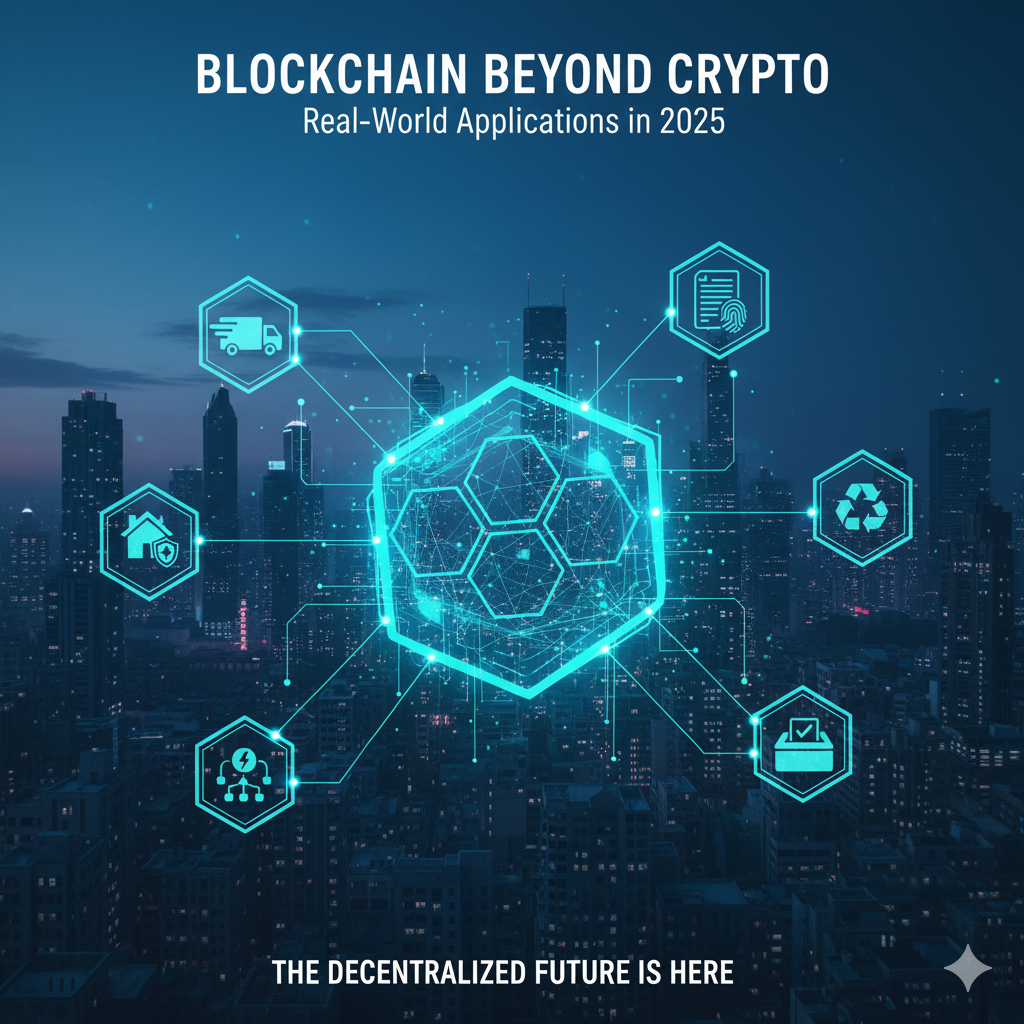
When most people hear “blockchain,” they immediately think of cryptocurrency. While Bitcoin and Ethereum popularized the technology, blockchain’s potential extends far beyond digital coins. In 2025, blockchain is becoming a transformative force across industries, revolutionizing the way we store, verify, and exchange information. This post dives deep into the real-world applications of blockchain technology that are shaping business, government, and daily life.
We start by exploring supply chain management, where blockchain provides transparency, traceability, and accountability. From tracking the origin of raw materials to ensuring ethical sourcing, blockchain ensures every step in the supply chain is verifiable and tamper-proof. Next, we examine digital identity verification, which allows individuals and organizations to prove identity securely, reducing fraud and enhancing privacy.
The post also covers blockchain in voting systems, healthcare, and intellectual property. In voting, blockchain enables transparent, tamper-resistant elections. In healthcare, patient records can be securely shared across providers without compromising privacy. For creatives, blockchain facilitates proof of ownership and royalties for digital assets.
Beyond technical explanations, we discuss adoption challenges, including scalability, regulatory hurdles, and interoperability between networks. Finally, we look at future trends — how blockchain combined with AI and IoT is driving smart cities, automated contracts, and decentralized governance. By the end, readers will understand that blockchain isn’t just a buzzword tied to crypto; it’s a foundational technology poised to reshape industries and everyday life in the coming years.