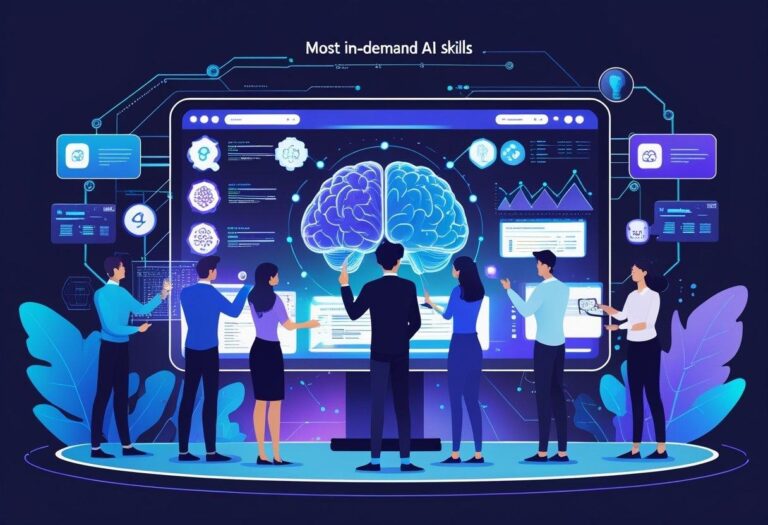
What AI Skills Do Employers Want? Essential Abilities for 2026 Hiring – The job market’s changing fast as artificial intelligence shakes up how businesses run. Mentions of AI skills in job postings have nearly tripled lately.
Companies now expect candidates in every department to show at least some AI know-how. That’s not just for tech folks anymore.
Employers want a mix of technical chops think machine learning, prompt engineering and soft skills like critical thinking, adaptability, and ethical judgment. The exact technical stuff depends on your job, but the big picture’s clear: you’ve got to work with AI systems in a way that’s both effective and responsible.
This guide breaks down the AI skills hiring managers actually care about, from data science basics to conversational AI. You’ll see which technical abilities matter for your field, how to build cross-functional skills that play well with AI, and some practical ways to show off what you can do.
What AI Skills Do Employers Want in the Modern Workplace
AI skills aren’t just about technical know-how. They’re also about judgment, evaluation, and decision-making basically, how well you work with AI systems.
Organizations now care less about which platforms you know and more about how you actually use AI to get results.
AI Skills Versus AI Literacy
AI literacy is just knowing what AI is, how it works, and where it fits in business. Maybe you know AI can generate text, analyze data, or automate stuff. That’s a start, but it’s pretty basic.
AI skills go deeper. Can you check AI outputs for accuracy? Spot bias or errors? Make decisions based on what AI suggests, but also know when to ignore it? That’s what employers want.
They look for people who can supervise AI, not just use it. Just listing AI tools on your resume isn’t enough if you can’t show good judgment or accountability.
The Shift from Tools to Capabilities
Back when AI was new at work, companies mostly asked if you’d used ChatGPT, Midjourney, or whatever platform was trending. That’s old news.
Now, employers care way more about capabilities than tools. AI platforms change all the time. What’s hot today could be gone next year.
You’ve got to be able to learn new systems, think critically across different platforms, and communicate AI’s limits to others. It’s about transferable skills prompting with precision, evaluating outputs, and owning your decisions.
Technical fluency still counts for some jobs, but most roles just need you to understand how to apply AI, not build it from scratch.
Why AI Skills Matter for Every Role
AI isn’t just for the tech crew anymore. Marketing, ops, finance, HR, management everyone’s using it to work smarter.
Every department expects at least some AI skills now. Whether you’re in customer service, content, project management, or leading a team, you’re probably working with AI tools.
If you ignore this, you’re up against candidates who know their stuff and can work with AI. Your skills here don’t just help you get hired they determine how much value you bring once you’re in.
Foundational Technical AI Skills Employers Seek
Machine learning and programming sit at the core of technical AI jobs. Companies want people who can build, train, and roll out AI models using standard tools.
Machine Learning and Applied Algorithms
If you’re an AI developer or machine learning engineer, machine learning is the big one. You need to know how to create and test algorithms so systems can learn from data.
Employers look for three main approaches: supervised learning (using labeled data), unsupervised learning (finding patterns in unlabeled data), and reinforcement learning (training models by rewarding them).
Picking the right algorithm for the job is huge. You should know when to use decision trees, random forests, support vector machines, or clustering. Data scientists really need feature engineering and model evaluation skills to make sure things work accurately.
Deep Learning and Neural Networks
Deep learning’s a hot subset of machine learning, and it’s getting more important. You need to know how neural networks process info through multiple layers to spot complex patterns.
CNNs are key for image recognition. RNNs handle stuff like text and speech. Transformers run most modern language processing.
You’ve got to be comfortable with frameworks like PyTorch and TensorFlow they’re the main tools for building neural networks. Can you set up model architectures, tune hyperparameters, and stop overfitting with dropout or regularization? That’s what employers are checking for.
Programming Languages and Frameworks
Python rules the AI world, mostly because it’s easy to read and has tons of libraries. You’ll need solid Python skills to use machine learning frameworks and handle data.
Java pops up in big enterprise AI. C++ is important for speed-critical or embedded systems. Scala and Julia are catching on for big data and numerical stuff.
It’s not just about writing code, though. You need to understand version control, testing, and how to plug AI models into real systems. Clean, maintainable code is a must nobody wants to untangle someone else’s mess.
Core Data Science and Engineering Skills
Companies need people who can build and run the infrastructure behind AI. If you can manage data pipelines, deploy models reliably, and handle big data operations, you’re in demand.
Data Engineering and Infrastructure
Data engineers create the systems that move, store, and process data at scale. You’ll need to know SQL and Python for querying databases and automating stuff.
Most organizations use cloud platforms like AWS, Azure, and Google Cloud, so you should get comfortable there. You’ll design data lakes and warehouses for both structured and unstructured data.
Tools like Apache Spark help with distributed computing, and Kafka handles real-time data streaming. Optimizing queries and managing storage costs matter a slow, bloated system just burns money.
You need to handle both batch and streaming data. That means you can process old data in big chunks and also deal with new data as it comes in.
MLOps and Model Deployment
MLOps is all about getting machine learning models running smoothly in production. You need skills with Docker for containers and Kubernetes for orchestration.
As an MLOps engineer, you’ll set up CI/CD pipelines to test and deploy models automatically. You’ll also monitor performance, catch drift, and retrain models when they start slipping.
Tools like MLflow, Kubeflow, and SageMaker help you track experiments and manage different versions. Scaling models from prototype to production is a must you have to make sure they run fast and reliably, even when things get busy.
Data Analytics and ETL Pipelines
ETL pipelines (extract, transform, load) pull data from sources, clean it up, and move it where analysts and data scientists can use it. You’ll use tools like Apache Airflow, dbt, or Azure Data Factory to set up these workflows.
Your job is to make sure data is clean, error-free, and ready for action. You’ll standardize formats, merge info from different sources, and build pipelines that deliver data on time.
Balancing speed and reliability is key. Some reports need pipelines that never fail, while exploratory analysis calls for more flexible setups.
Mastering Natural Language Processing and Conversational AI
Natural language processing (NLP) lets machines understand and generate human language. Conversational AI takes that and builds interactive systems think chatbots and virtual assistants.
Employers want people who can work with large language models, do prompt engineering, and build chat-based apps that actually work.
Natural Language Processing Fundamentals
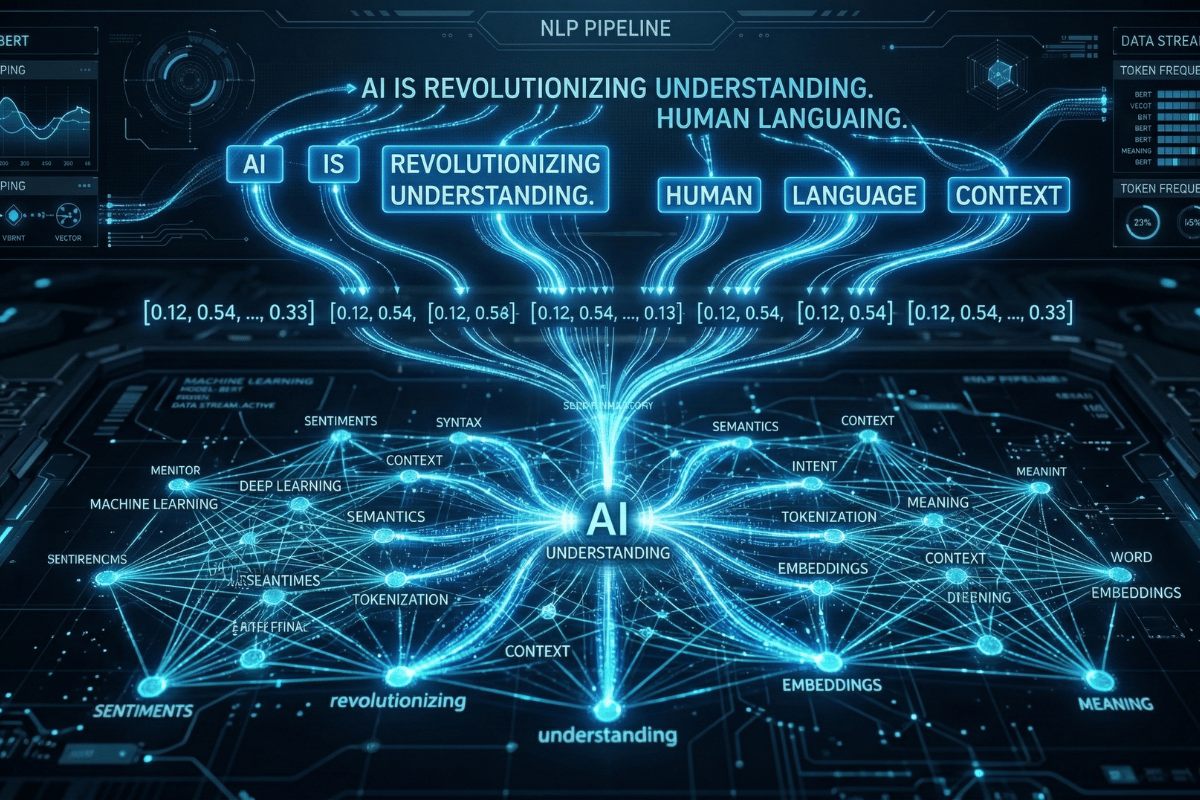
NLP is the backbone for teaching machines to handle human language. You’ll need to know tokenization, named entity recognition, sentiment analysis, and text classification.
Frameworks like Hugging Face Transformers give access to models like BERT for transfer learning. BERT’s still a big deal for understanding context in text.
Python libraries spaCy, NLTK, Hugging Face are the go-to tools. You should also get the basics of attention mechanisms and how transformers process sequences.
Practical NLP skills include:
- Cleaning and prepping text
- Using embeddings for feature extraction
- Evaluating models (think F1 score, perplexity)
- Handling multiple languages
Industries like healthcare, legal tech, and HR are always looking for NLP specialists to dig through documents and pull out useful info.
Large Language Models and LLM Tuning
Large language models (LLMs) like GPT, Gemini, and Claude have changed the game. You need to know how they work and how to tweak them for real business needs.
Fine-tuning means adjusting pre-trained LLMs with domain-specific data. You might use full fine-tuning, LoRA, or instruction tuning.
Retrieval-augmented generation (RAG) pairs LLMs with outside knowledge bases to cut down on hallucinations and give solid, checkable answers. That’s critical for applications that can’t afford to be wrong.
You should know how to use model APIs, manage token limits, and keep inference costs in check. If you can handle quantization and model compression, you’ll deploy LLMs more efficiently. Hugging Face is full of models and datasets for you to experiment with.
Conversational AI Applications
Conversational AI covers chatbots, virtual assistants, and voice interfaces. Employers want folks who can take these from idea to production.
Prompt engineering is huge with LLMs. You’ll need to write prompts that guide the model, handle weird cases, and keep conversations on track.
Key areas include:
- Designing conversation flows
- Recognizing intent and filling in info
- Managing multi-turn conversations
- Integrating with business systems and APIs
Industries like customer service, e-commerce, and finance all use conversational AI. Experience with Dialogflow, Rasa, or custom LLM solutions is a plus. And don’t forget testing for bias, safety, and appropriate responses is a non-negotiable before launch.
Generative AI and Prompt Engineering
Employers are looking for people who can design and launch generative AI systems, write prompts that get accurate results, and use retrieval-augmented generation to ground AI responses in real data.
Developing Generative AI Solutions
You’ll need to know how to build and deploy generative AI apps using platforms like OpenAI’s GPT-4, Stable Diffusion, and Cohere. That means understanding different model architectures, from transformer-based language models to diffusion models for images.
Fine-tuning pre-trained models for business is a big differentiator. You should be able to adjust parameters, manage training data, and optimize performance for specific cases. Tools like Gradio can help you create simple interfaces so non-tech folks can use your AI tools.
It’s not just about building cool stuff you have to know the risks. Recognize when models hallucinate or show bias, and put in safeguards to keep things on track. Companies want people who can innovate without forgetting responsible AI practices.
Effective Prompt Design and Chaining
Your prompt engineering skills shape how well AI models respond. Employers want people who can write clear, specific instructions for tools like ChatGPT and GPT-4 so the output is useful and not all over the place.
Key prompt engineering techniques include:
- Writing prompts that give enough context and background
- Showing a few examples so the AI knows the format you expect
- Tweaking temperature and token settings to control creativity and length
- Breaking up big tasks into step-by-step prompt chains
You’ll need to get comfortable with testing and refining your prompts. Try different wordings, play with how specific you get, and keep track of what actually works best for different jobs.
If you can show you systematically improve prompts through trial and error, employers will see you as a strategic thinker.
Retrieval-Augmented Generation
RAG is a mouthful, but it just means combining generative AI with search so answers are based on real, reliable data. You’ll want to know how to build RAG systems that pull info from knowledge bases before generating answers this helps cut down on those weird, made-up AI responses.
You’ll need to get hands-on with vector databases, embedding models, and retrieval tools. That means figuring out how to split up documents, set up semantic search, and balance between what’s retrieved and what the AI makes up.
Setting up RAG pipelines involves making sure answers are high-quality and cite their sources. You’ll have to deal with things like relevance thresholds and context window limits, and sometimes, the system just won’t find enough info. Companies building agentic AI systems really want people with RAG experience because it makes their AI more trustworthy.
Advanced Computer Vision and Image Processing
Employers are on the hunt for folks who can build systems that make sense of visual data. Think: finding objects in live video or classifying medical images accurately.
You’ll need to know your way around convolutional neural networks and frameworks that can handle production workloads.
Object Detection and YOLO
Object detection is about finding and tagging multiple things in photos or videos. YOLO (You Only Look Once) is a big deal here because it looks at the whole image at once, which makes it fast perfect for stuff like self-driving cars or security cameras.
You should know how YOLO chops up images into grids and predicts both the boxes and what’s inside them at the same time. Companies love seeing experience with YOLOv5, YOLOv8, and similar models since they hit that sweet spot between speed and accuracy.
If you can fine-tune YOLO on custom data, that’s a big plus. It shows you can solve real-world problems, not just run demos.
Image Classification and Medical Imaging
Image classification is all about slapping the right label on an image using convolutional neural networks (CNNs). These models figure out features directly from pixels no need for manual tinkering.
Medical imaging is a huge area. Here, you’re labeling X-rays or MRIs to help spot diseases. Healthcare tech companies want vision engineers who know transfer learning with models like ResNet, VGG, and EfficientNet.
You’ll need to handle tricky stuff like imbalanced datasets and make sure your models are validated properly. Messing up here isn’t just a technical issue it can have real consequences.
Building Vision Systems
A computer vision engineer does more than just train models. You design the whole system: getting the images, processing them, and making sure everything runs smoothly.
You’ll need to know how to calibrate cameras, clean up images, and optimize deployments. Employers expect you to slot computer vision models into production pipelines using tools like OpenCV and TensorFlow.
Edge deployment is another thing think about model quantization and using GPUs or custom chips. Show off projects where you built the whole pipeline, not just the training bits. Businesses want solutions that actually work at scale, not just cool experiments.
Non-Technical and Cross-Functional AI Skills
Technical chops are great, but employers also want people who can help teams get the most out of AI no matter their background. It’s about knowing what AI can do, working across departments, and rolling with the tech as it changes.
AI Literacy for Non-Technical Roles
AI literacy means you get how AI works, even if you don’t code. You should know its strengths and limits, spot when it spits out biased or weird results, and figure out if a tool makes sense for your job.
You’ll want to understand how chatbots generate answers, why they sometimes mess up, and why data quality matters. Don’t just take AI outputs at face value question them.
Critical thinking is key. Double-check info, look for bias, and know when it’s time for a human to step in. Employers need people who use AI thoughtfully and keep ethics and security in mind.
Communication and Collaboration
AI projects need input from both techies and non-techies. You’ve got to explain AI concepts in plain English and help developers understand what the business actually needs.
Good communication means you can document how AI fits into your workflow, share insights from AI data, and flag risks or limits to stakeholders. You should be able to explain why a certain AI approach matters for business goals.
Collaboration really makes or breaks AI adoption. You might join forces with data teams to tweak a chatbot, work with IT on rollouts, or talk strategy with leadership. Your knack for connecting business and technical worlds can decide if a project flies or crashes.
Productivity and Adaptability
Employers want people who use AI to boost their own results not folks who see it as a threat. You should spot tasks where AI helps, fit tools into your workflow, and track if automation actually saves time.
Adaptability is huge. AI moves fast; what’s hot now could be old news soon. You’ll need to experiment, learn new tools, and tweak your processes as tech evolves.
Keep up with AI trends in your field, try out new apps, and keep improving how you work with automated systems. If you can roll with the changes, you’ll stay valuable to employers.
Responsible and Ethical AI in the Workplace
Companies want team members who get AI ethics and can build systems that are fair, clear, and accountable. It’s about making sure AI works responsibly and keeps everyone’s trust, especially with new rules popping up.
AI Ethics and Fairness
AI ethics covers the rules and habits that keep AI responsible at work. You need to spot and fix potential harms AI could cause to employees, customers, or anyone else.
Fairness means catching and reducing bias in automated decisions. You’ll need to know about protected traits like race, gender, and age, and make sure your algorithms aren’t just repeating old biases. Look into fairness metrics like demographic parity or equal opportunity.
Employers want people who can run fairness audits and test protocols. You’ll need to check AI systems across different groups and document any gaps. Sometimes, you’ll need to step in with human review especially for big decisions like hiring or promotions.
Model Explainability and Accountability
Explainability is about being able to say, in plain terms, why an AI model made a particular call. Employers want you to break down complex model behavior for non-tech folks. That kind of transparency builds trust.
You should know interpretability tools like SHAP values they show which features mattered for a prediction. This helps you spot which factors drive results and if they make sense for the business and ethics.
Accountability means there’s a clear trail for every AI system. Keep records of model versions, data sources, performance stats, and decisions. If something goes wrong, you should be able to trace it back and fix it fast.
Managing Model Drift and Bias
Models don’t stay perfect forever. Model drift happens when real-world data changes and the AI starts to slip. You’ll need to keep an eye on performance metrics, accuracy, and how input data shifts over time.
Bias isn’t a one-and-done fix. Keep testing models on different groups and use cases. If you spot bias, try things like rebalancing data, tweaking algorithms, or adding constraints.
Employers really value people who can set up automated monitors to catch drift or bias before things get ugly. Know how to set alert thresholds and what to do when problems pop up.
Practical Application: AI Tools and Platforms
Employers expect you to actually use AI tools, plug into cloud platforms, and work with open source projects that drive real business outcomes. Being able to deploy these tools shows you’re more than just theory.
Adopting AI Tools in Business
Get familiar with enterprise AI tools that save time and show clear results. ChatGPT is everywhere for writing and customer service, while Copilot helps with coding and docs.
When you list tools on your resume, tie them to outcomes. Maybe you used HubSpot AI to boost lead conversions, or Canva’s MagicDesign to speed up design work. Employers want to see you know which tools solve which business headaches.
Common Business AI Tools:
- ChatGPT: Writing, data analysis, customer support
- HubSpot AI: Marketing automation, CRM
- Copilot: Coding, documentation
- Canva AI: Visual content, branding
Don’t just list every tool you’ve ever touched. Focus on the ones that actually matter for your field.
Leveraging APIs and Cloud Platforms
You’ll need to know how to plug AI into apps using APIs and cloud services. OpenAI’s API lets you drop GPT models right into your software, and cloud providers give you the muscle to scale.
The big platforms are AWS AI, Google Cloud AI, and Azure ML. They offer pre-trained models, custom training, and MLOps tools for real-world systems.
| Platform | Primary Use Cases |
| OpenAI API | Language models, embeddings, fine-tuning |
| AWS AI Services | Computer vision, NLP, forecasting |
| Google Cloud AI | TensorFlow, AutoML, Vertex AI |
| Azure ML | Model training, deployment, monitoring |
You should know how to work with RESTful APIs think authentication, rate limits, and error handling.
Integrating Open Source Solutions
You can get ahead by using open source AI frameworks. Hugging Face is a go-to for pre-trained models you can tweak for your own needs. It’s pretty much a must-have for NLP and vision projects these days.
Gradio and FastAPI help you build interfaces and APIs for your models fast. Gradio is great for demos; FastAPI makes robust endpoints with modern Python. Flask is still handy for simple deployments.
Key Open Source Tools:
- Hugging Face: Model hub, Transformers, training tools
- Gradio: Demos and prototyping for ML
- FastAPI: Fast Python APIs with auto docs
- Flask: Lightweight model serving
Try these out on side projects. Contributing to open source or keeping a GitHub with your work shows you can handle real-world tech, not just classroom stuff.
Demonstrating and Growing Your AI Skills
You can’t just learn AI in a vacuum. You’ll need hands-on projects, smart ways to show your skills to employers, and a habit of keeping up with the latest tech in enterprise AI.
Building Projects and Portfolios
Your portfolio should show you can solve real business problems with AI. Go for end-to-end projects, not just copying tutorials.
Build things that look like what companies actually use. Maybe set up a RAG system with full documentation, create a fraud detector for tricky datasets, or fine-tune a language model for a niche industry. These projects prove you get the realities of production work.
Good portfolio projects:
- ML models deployed as APIs, with error handling
- Computer vision systems for live video or images
- NLP apps that handle messy, real-world text
- MLOps pipelines with monitoring and retraining
Write up your decisions. Say why you picked certain algorithms, how you fixed data issues, and what tradeoffs you made. Share your code on GitHub with clear README files outline the problem, your approach, and the results.
Showcasing AI Skills to Employers
You’ll stand out if you tie your skills to real impact. On your resume or in interviews, link your technical work to business results.
Don’t just say, “built a recommendation system.” Instead, try, “deployed a recommendation engine that boosted user engagement by 23%.” Frame your work around revenue, efficiency, or risk reduction.
When you interview, talk about the challenges you faced maybe dealing with model drift, cutting inference costs, or working under regulations. This shows you get the messy reality of production AI.
Write technical blog posts or case studies about your projects. A lot of AI jobs happen through referrals or online presence. Sharing your thoughts on prompt engineering, MLOps, or industry-specific AI can get you noticed as someone who’s ready to make an immediate impact.
Staying Updated with Industry Trends
The AI field moves fast. New models, frameworks, and best practices pop up all the time.
If you want to stay sharp, keep learning. Qualified folks keep their knowledge fresh, while others fall behind.
I suggest following research labs and engineering blogs from places like OpenAI, Google DeepMind, Meta AI, and Anthropic. Check out papers on arXiv for the latest techniques, but don’t just skim look for stuff that’s actually being used in production.
Newsletters like The Batch or Import AI help you catch important updates without drowning in info. They’re a lifesaver when your inbox feels overwhelming.
Try out new tools as they get popular. Platforms like Hugging Face provide open-source models and datasets that help developers experiment with modern AI systems.
If everyone starts talking about LangChain or Mistral, build something small with them. That hands-on practice makes it way easier to talk about current tech during interviews.
Jump into AI communities Discord servers, Reddit forums, even local meetups if you can find them. Chatting with other practitioners gives you a peek at real-world problems and clever fixes you won’t find in official docs.
Honestly, a lot of AI jobs get filled through these networks before anyone posts them online. If you want an edge, get involved early.
Related Posts
1. Where Should a Beginner Start in Cyber Security? Step-by-Step Guidance
If you are exploring AI careers, cybersecurity is another fast-growing tech field worth considering. Learn the basic roadmap, required skills, and how beginners can start a career in security.
2. What Is the Easiest Cybersecurity Job to Get Into? Beginner Roles and Skills
Looking for an entry-level tech role? This guide explains the easiest cybersecurity jobs to start with and the practical skills employers expect from beginners.
3. How to Go Viral on TikTok in 2026: Proven Steps and Winning Strategies
Content creators are increasingly using AI tools to boost their reach on social platforms. Discover practical strategies to grow faster and create viral content on TikTok.
4. Make Money on TikTok Without Showing Your Face
AI tools now make it easier to create faceless content and monetize it online. Learn different ways to earn on TikTok without appearing on camera.